
The AR MELL Institute
A consortium to promote biodiversity
Our history

Biodiversity, like climate, is one of the major challenges facing our societies and their sustainability. However, while climate change is now widely taken into account in local and regional policies, biodiversity issues are still poorly understood and difficult to integrate into local policies. Worse still, the development of an economy aimed at reducing greenhouse gas emissions can result in actions that are detrimental to local biodiversity, as demonstrated by the many controversies surrounding renewable energy development projects built without reference to biodiversity protection or conservation.
The AR MELL Institute's Biodiversity Campus aims to enable targeted audiences - in particular political and corporate decision-makers, especially in agriculture, as well as young people, students and young professionals - to discover the realities of biodiversity accompanied by recognized specialists, researchers and enlightened amateurs, by taking part in :
1. workshops for small groups;
2. seminars for targeted audiences on strategic topics for local players; 3. scientific days for senior executives;
4. seminars for the general public;
5. discovery days with tours of the estate led by experts.
It also aims to initiate and implement multi-disciplinary scientific and/or technical programs, with a strong applied and concrete research dimension (field studies, experiments, rapid prototyping, demonstrators, etc.).

Experts from the AR MELL consortium
The AR MELL institute has a wealth of skilled resources at its disposal, both internally and through its network of partners, experts and research institutes (Institut de Recherche pour le Développement (IRD), Centre National de la Recherche Scientifique (CNRS), AgroParisTech... ), universities and specialized associations (Société entomologique de France (SEF), Planète cétoines, Office Pour les Insectes et leur Environnement (OPIE)...), companies (Ferme Notre Dame de Paix, Entomo L...) Depending on the topics addressed and their availability, these committed researchers make available to participants their extensive knowledge of biodiversity and its challenges.
Le site référence
This project uses the Domaine de la Motte-Basse (Côtes-d'Armor) as a reference site. With some 100 ha, including 40 ha of Utilized Agricultural Area (UAA), surrounding the estate and managed organically, it is backed by woodland on the edge of the Boquen forest massif (1,000 hectares privately owned). It illustrates the main ecosystems of the Brittany region:
-
wet meadows ;
-
willows ;
-
mixed coniferous/deciduous forest ;
-
moorland ;
-
a very old, man-made, walled pond.
Our team

Ivan Le Mintier
President of the Ar Mell Institute
Farmer and shepherd of black bees
+33 (0)6 73 31 97 48
Ivan LE MINTIER is co-founder of the first industrial chair at the University of Paris-Saclay in frugal engineering and innovation. A specialist in living organisms, food and poverty, Ivan is also a farmer on the "Notre Dame de Paix" organic farm and, as a beekeeper, is developing a program on sustainable beekeeping and local bees. He has been a part-time lecturer at HEC in the Business and Poverty chair and a lecturer at AgroParisTech in the 3rd year of the Grande École.

Philippe LE GALL
Philippe LE GALL is an entomologist specializing in biodiversity (systematics and evolution) and insect ecology at the Institut de Recherche pour le Développement (IRD). He is currently General Secretary of the Société Entomologique de France, and Vice-President of the Office pour les Insectes et leur Environnement. He coordinates the Insectinov-Sud international research group on edible insects.
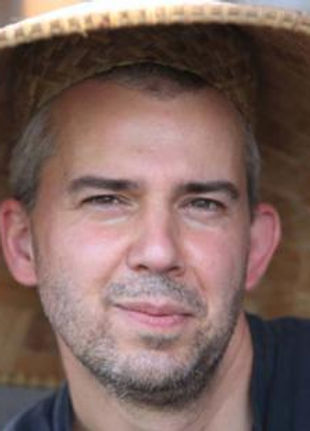
Nicolas CÉSARD
Nicolas CÉSARD is an anthropologist and ethnoentomologist based at the Musée de l'Homme, part of the Muséum National d'Histoire Naturelle (MNHN). He is president of IPE, an association for intercultural dialogue bringing together researchers and members of local and indigenous communities, and coordinates ANR BeeCON, a research program to understand traditional practices associated with bee conservation in Indonesia.